
Reports
Staff Support & Performance
Overview
Social service programs depend heavily on the relationships between staff and service participants, making staff support critical to service quality. When staff feel supported professionally, personally, and financially, they are more motivated and effective in their roles. Organizations that prioritize staff supervision, development, and retention ensure consistent service quality and foster a strong, adaptable organizational culture. Effective support practices equip staff at all levels to perform their roles well, enhancing participant outcomes and overall program performance.
Conversely, a lack of staff support leads to burnout, high turnover, and reduced productivity. Burnout, identified by the World Health Organization as an occupational issue, stems from factors such as unfair treatment, excessive workloads, lack of role clarity, poor communication, and unrealistic deadlines. Burnout negatively impacts staff health, leading to absenteeism, presenteeism, job dissatisfaction, and lower performance, which hinders participant success.
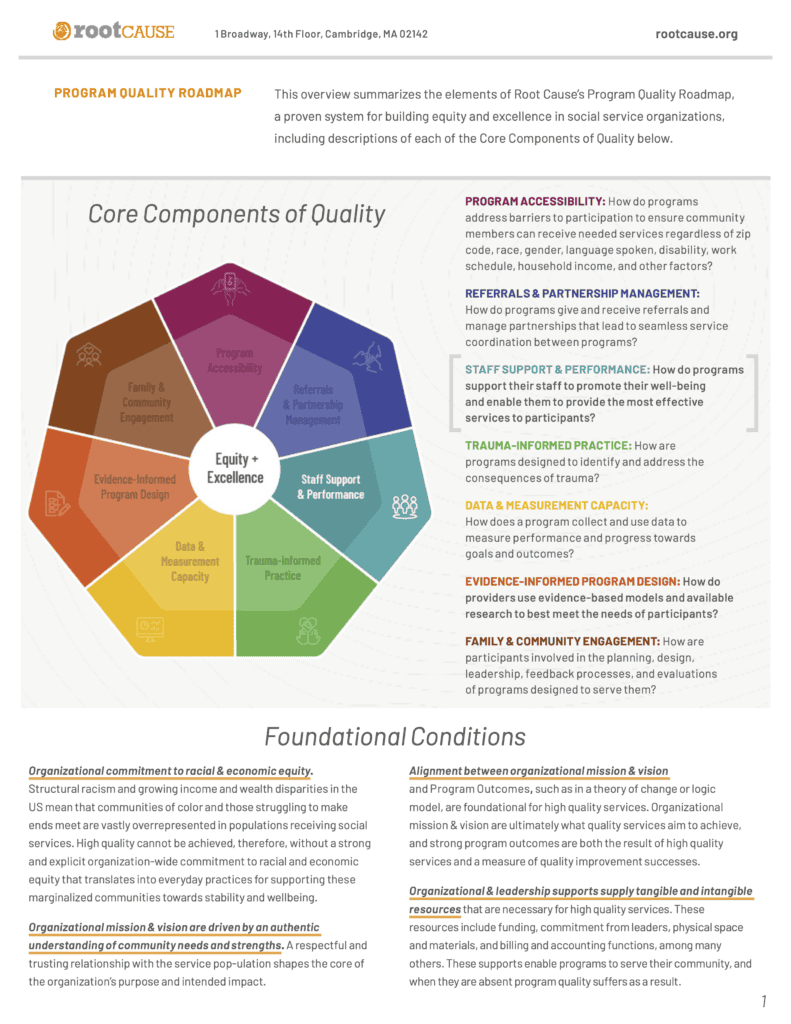
Improving staff support does not always require significant financial investment. While increasing compensation may take time, other practices—like enhancing staff engagement, clarifying roles, and improving communication—can be implemented at minimal cost. By strengthening staff support and performance practices, organizations foster effective provider-participant relationships, ensure high-quality services, and achieve better outcomes. Read more here.
Publication Year:
2021
Source | Publisher:
Root Cause
Best Suited For:
Executive Leadership, Human Resource Team
Latest:
Securing Non-Profit Funding: How 28 Leading Organisations Secured Funding to Increase Their Reach and Impact
A global research report analysing how 28 high-impact nonprofits have successfully secured funding to achieve impact at scale. Drawing on interviews and financial data across organisations operating in over 70 countries, the report explores funding…
Redefining Risk: The Cost of Not Funding Women’s Rights Organizations
This report challenges conventional notions of financial risk in development and philanthropy by shifting the focus from the perceived risks of funding women’s rights organizations to the far greater risks of not funding them. It…